From Bratislava to Lagos: A Slovak Pilot’s Life on the Boeing 737
Matúš Višňovský started flight training at 27 after years in business. He now flies passengers and cargo in Africa, returning to Slovakia between trips.

BRATISLAVA, Slovakia — Matúš Višňovský still remembers the runway number. He was 11, watching from inside the cockpit as a Tupolev Tu-154M approached Runway 31 at Bratislava’s M. R. Štefánik Airport. As the Soviet-built jet came in to land, he thought about what it would be like to fly for a living.
Sixteen years passed before he began flight training. By then, he had earned a degree in economics and spent years in business. Flying would eventually take him to Lagos, where he now flies Boeing 737-800s on contract, mostly on domestic routes in Nigeria. His assignments have also taken him to Gabon, Cameroon and many other parts of the world.
From business to the flight deck
Višňovský grew up in Bratislava and went into business at 18, working in transportation and auditing services. He credits his family with supporting him as he found his own direction. In 2020, at 27, he began pursuing aviation professionally. He became a flight instructor before moving on to the Boeing 737.
His first job flying the 737 was with an ACMI operator, a company that provides leased aircraft, crew, maintenance and insurance.
Business jets were his original goal, but he saw fewer opportunities in Europe than in the United States. An existing business relationship opened the door to contract flying in Africa.
Asked what he would tell someone considering flight training at 27, he pointed to the demands of both getting into the cockpit and building a life around the job.
“Don’t overthink it,” he said. “Start as soon as possible, and be prepared to sacrifice a great deal to get into the cockpit of a large airplane. Once you’re there, you have to make compromises in your private life and in your relationships.”
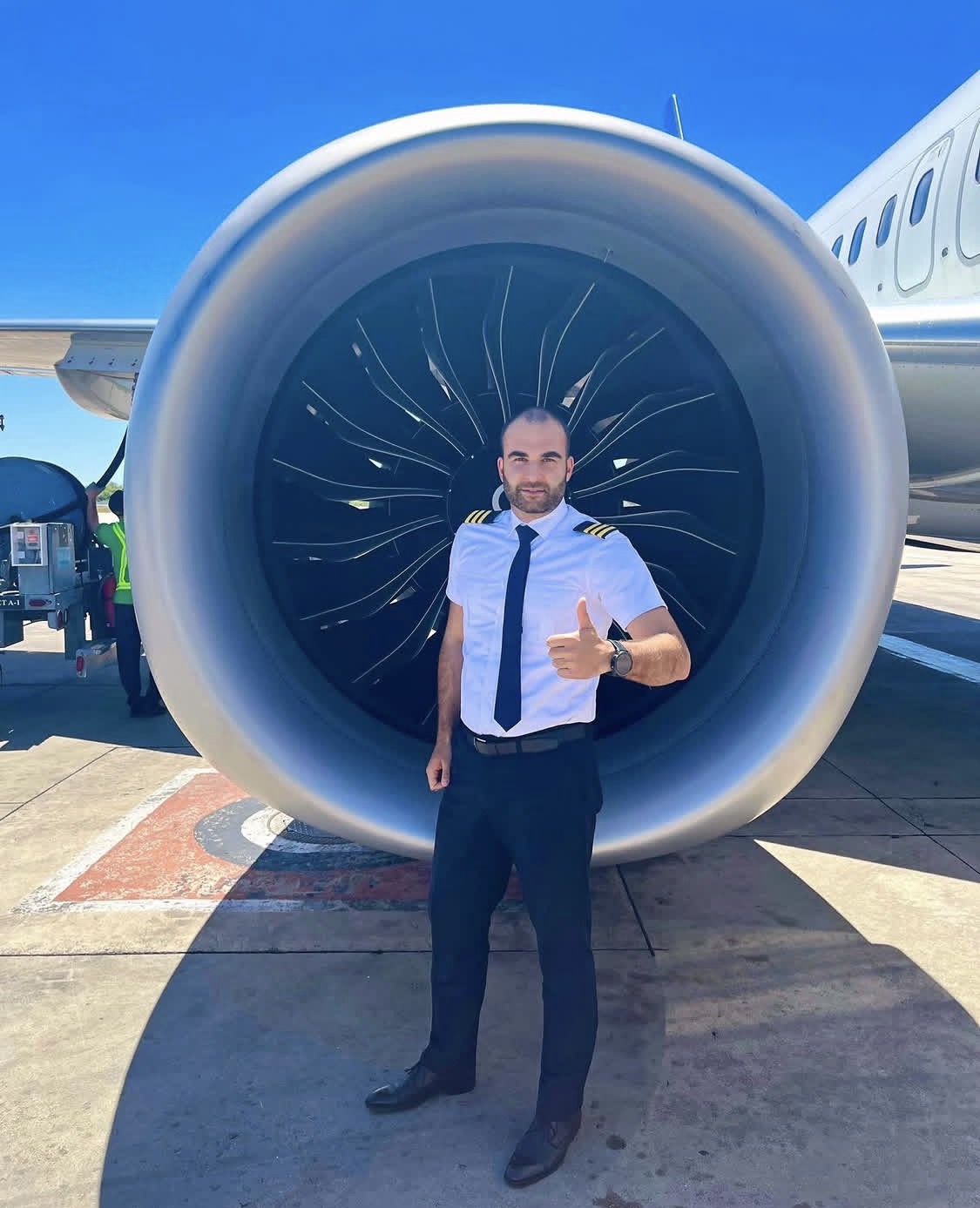
Flying the 737 out of Lagos
In Lagos, Višňovský flies with a close-knit group of pilots who know the region. Weather is one of the things he pays closest attention to. During the rainy season, thunderstorms can build along the Intertropical Convergence Zone, a band near the equator where trade winds meet. After dark, he said, crews have fewer visual cues to help them steer clear of storms.
His assignments include both passenger and cargo flights. When asked about incidents involving passengers, he recalled a medical diversion on a flight outside Africa.
“There’s more to worry about with passengers than with cargo,” he said. “I consider cargo flying less problematic.”
A night near Mount Cameroon
One encounter with weather that stood out came on a nighttime cargo flight from Port Harcourt, Nigeria, to Douala, Cameroon. About 15 minutes before landing, Višňovský recalled, he and the captain encountered a large thunderstorm near Mount Cameroon, which rises to 13,435 feet (4,095 meters).
With high terrain on one side and the storm on the other, the two pilots had limited room to maneuver. Višňovský recalled that air traffic control in Douala could give them little detail about the storm’s position.
“The whole episode lasted maybe a few minutes,” he said. “You cannot afford to underestimate weather like that.”
Asked what people get wrong about the job, he joked that they assume the autopilot does everything while the pilots sit up front taking pictures for Instagram.
“Every day is different, and every flight has its own character,” he said.
Three weeks away, two weeks at home
Višňovský spends three weeks on assignment and two weeks at home in Bratislava. That’s when he makes time for sports, family and friends. Asked what he misses most when he’s away, he first mentioned the people he looks forward to seeing. Then came the food. Schnitzel and goulash made the list, along with bryndzové halušky, Slovak potato dumplings with sheep’s cheese.
He still wants to fly business jets and would consider flying a larger aircraft on intercontinental routes if the right opportunity came along.
At 11, watching the Tupolev land in Bratislava, Višňovský imagined what it would be like to fly for a living. Now, after years of flying abroad, he knows what else he wants from his next assignment. He’d like a schedule that gives him more time at home.
“I’m certainly satisfied,” he said, “but I can also imagine making some changes that would let me spend more time with the people who matter to me.”
A word to young aviators
For many pilots, the making of an aviator begins long before the first lesson. For Višňovský, it began at 11 on an approach to Runway 31. He held on to that interest for 16 years before he started training.
If you’ve caught the flying bug, do everything you can to keep that spark alive. Learn what you can, spend time around people who fly and take the next step when you can. There will be setbacks along the way. Don’t let self-doubt be the thing that stops you. The work you put in can lead to a rewarding career and open up parts of the world you never imagined you’d see.
Sources
- NOAA JetStream: Inter-Tropical Convergence Zone, including Nigeria’s wet and dry seasons
- NASA Earth Observatory: The Intertropical Convergence Zone
- IATA Reference Manual for Audit Programs: ACMI Lease Agreement
- UK Civil Aviation Authority: Aircraft leasing (wet lease definition)
- Encyclopaedia Britannica: Mount Cameroon


