Leonardo AW109 Trekker: What Crews and Passengers Should Know About the Skid-Equipped Executive Twin
The Leonardo AW109 Trekker is a light twin flown in corporate and VIP roles. Speed, range, cabin options and cockpit facts from the manufacturer.
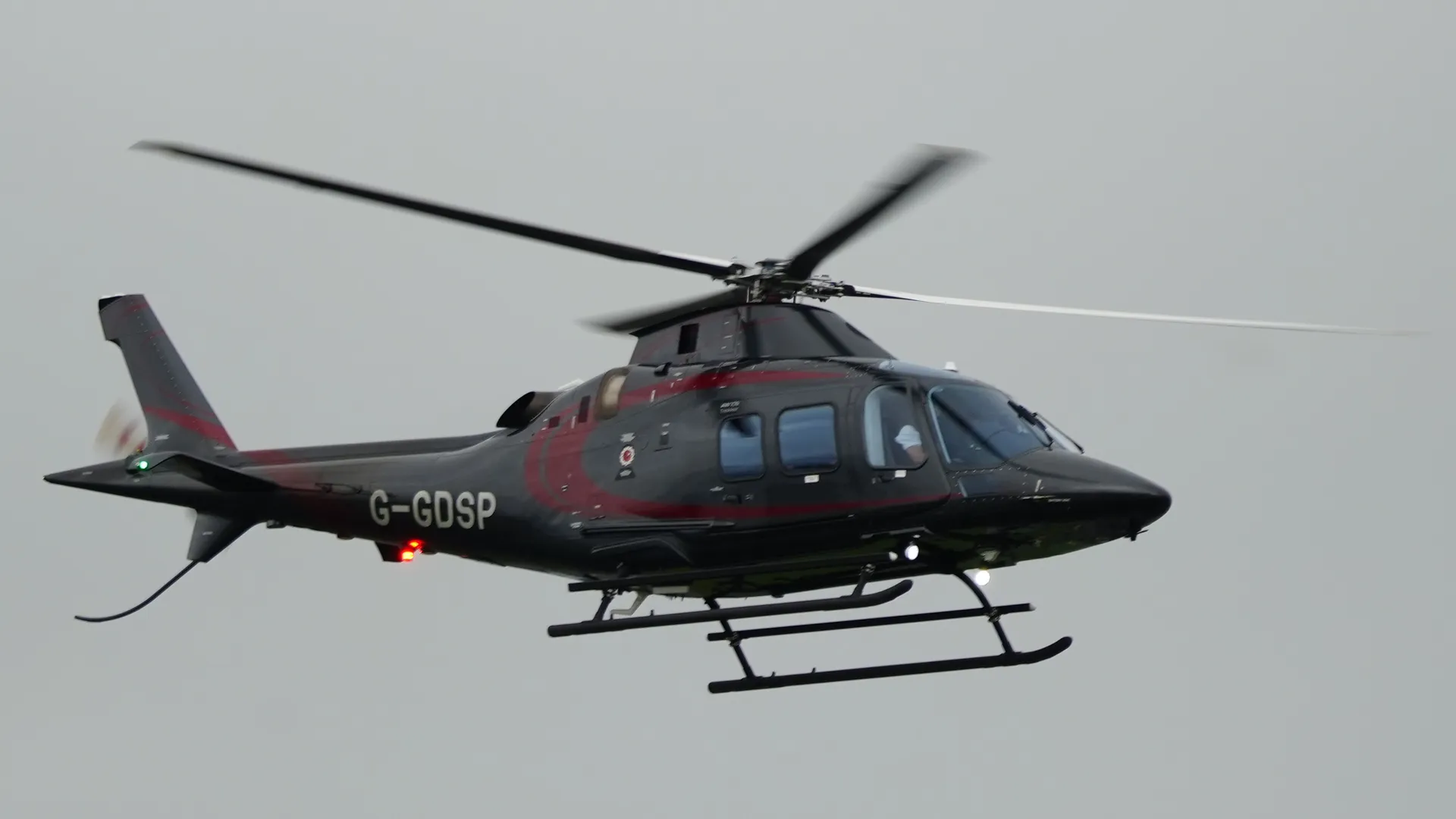
When a principal needs to get from a city heliport to an airport, a country house or a stadium in a hurry, the aircraft at the pad is often a light twin helicopter. One of the models flying those executive missions is the Leonardo AW109 Trekker, a skid-equipped member of the long-running AW109 family.
For business aviation crews who work alongside helicopter shuttles, and for flight attendants who may hand passengers off to one, here is a plain look at what the Trekker is and what the manufacturer says it can do.
A newer branch of a familiar family
The AW109 has been in service for decades, and most versions roll on retractable wheeled landing gear. The Trekker takes a different approach. AgustaWestland, now Leonardo Helicopters, announced it in February 2014 as an updated model, according to the AW109 entry on Wikipedia, which notes it was the company's first twin-engine helicopter built with skid landing gear. Final assembly takes place in both the United States and Italy, the same entry says.
Skids keep the design simple and rugged. The trade-off is that a skid helicopter does not taxi on wheels, so ground handling at a busy ramp or heliport works differently from the wheeled AW109 versions.
The numbers Leonardo publishes
Leonardo's technical data for the AW109 Trekker lists:
- Engines: two Pratt & Whitney Canada PW207C turboshafts, each rated at 735 shp maximum takeoff power, per Leonardo's Agusta VIP brand.
- Maximum gross weight: 3,175 kg (7,000 lb) with internal loads.
- Maximum cruise speed: 148 knots true (274 km/h) at 5,000 feet, ISA, maximum gross weight and maximum continuous power.
- Maximum range: 447 nm (828 km) with auxiliary fuel tanks and no reserve, or 366 nm (678 km) with a single auxiliary tank and no reserve.
- Maximum endurance: 4 hours 19 minutes with auxiliary tanks, no reserve.
- Hover ceilings: 15,120 feet in ground effect and 9,600 feet out of ground effect (ISA, maximum gross weight, takeoff power).
- Size: 12.96 m (42 ft 6 in) long with rotors turning, a 10.83 m (35 ft 6 in) main rotor.
Note the "no reserve" wording on the range and endurance figures. Those are brochure numbers. Real trip planning has to account for required fuel reserves, weather, winds and passenger and baggage weight.
Inside the cabin
Agusta, Leonardo's brand for VIP and private helicopters, describes the Trekker cabin as able to seat up to six passengers. It lists two layouts: an executive interior for five passengers and a corporate interior for six. The company highlights soundproofing in the cabin, wide sliding doors on both sides and an extended baggage compartment for personal luggage.
For a jet crew coordinating a connection, that baggage note matters. A helicopter's compartment is far smaller than a midsize jet's, so it pays to confirm bag counts and sizes with the helicopter operator before passengers arrive planeside.
In the cockpit
The Trekker uses a modular glass cockpit from Genesys Aerosystems. According to Agusta, the cockpit can be set up for single or dual pilot operation and for VFR or IFR flying, depending on what the customer orders. Leonardo says the layout is designed to reduce pilot workload and improve situational awareness.
That flexibility is worth understanding if you are booking or flying with a helicopter operator. A Trekker equipped for single-pilot VFR is a different tool from one set up for two pilots and instrument flight. The configuration, and the operator's own approvals, decide whether a flight can go when the weather is marginal.
Performance margins and safety features
Leonardo says the Trekker offers Category A Class 1 performance, which in plain terms means the helicopter is designed to handle an engine failure during takeoff or landing in confined areas, provided the operator follows the published Category A procedures and weight limits. The company also describes the airframe as crashworthy and points to high power margins in all flight conditions.
As always, a manufacturer's capability is not the same as an operator's approval. Charter passengers should expect the operator to fly within its own certificate, its operations specifications and the flight manual.
Why it matters to business aviation crews
Helicopter legs are often the first or last part of a business jet trip. Knowing the basics helps crews and cabin staff:
- Ask the helicopter operator for passenger and baggage limits ahead of time, especially with skis, golf bags or large luggage.
- Remember that range and endurance depend heavily on load and reserves, so a full cabin may change routing or fuel stops.
- Check whether the aircraft and crew are set up for IFR if the weather could turn, so the connection has a backup plan.
The AW109 Trekker is one of several light twins in executive service, alongside other models such as Airbus's ACH line we covered earlier this month. For crews, the takeaway is less about brand and more about asking the right questions before the rotor starts turning.