Synthetic Vision Explained: What the 3D Terrain on Your PFD Can and Can't Do
Synthetic vision paints terrain, obstacles and runways on the PFD. Here's how SVS works, what the FAA approves it for, and where SVGS lower minimums fit.
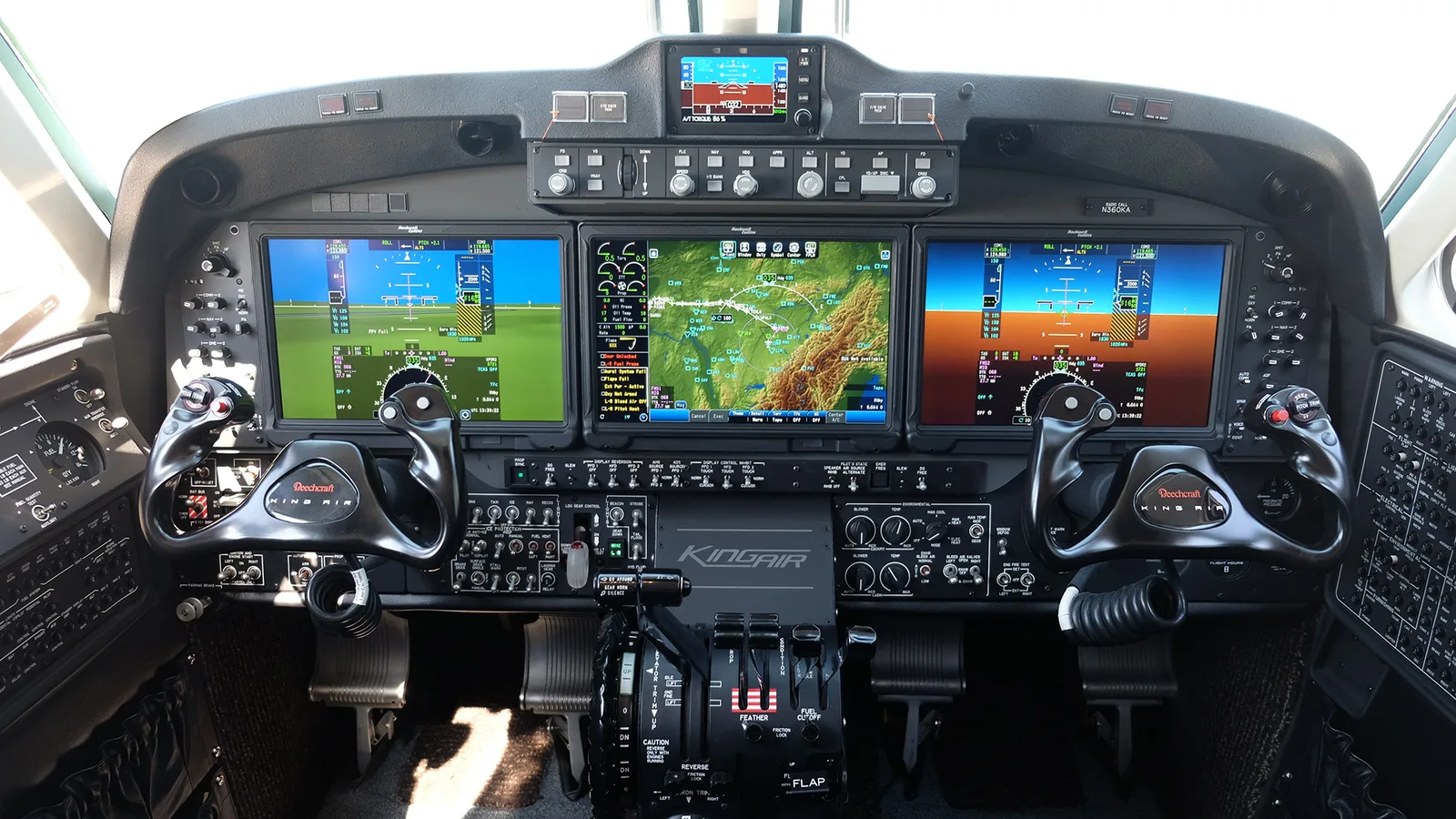
Fly a modern business jet into a dark mountain valley and the primary flight display looks like a clear day. Ridges, rising terrain and the runway ahead are drawn in color, even when the windshield shows nothing but cloud.
That picture is synthetic vision. It is now standard or optional on most new business aircraft flight decks, and a popular part of retrofit upgrades. But many crews are less sure about what it is approved to do. Here is a plain guide.
What synthetic vision is
A synthetic vision system, or SVS, is a computer-generated image of the outside world. The FAA's older guidance, AC 20-167A, describes it as an image built from the aircraft's attitude, a high-precision navigation position and a database of terrain, obstacles and other features.
In other words, nothing on the screen is "seen." The system knows where the airplane is and which way it is pointed, and it draws what the database says should be out there. That is the key difference from an enhanced vision system (EVS), which uses an infrared camera to show what is really in front of the nose.
A combined vision system (CVS) blends the two, laying live camera imagery over the synthetic scene. The FAA now covers EVS, EFVS and CVS in AC 20-167B, which replaced AC 20-167A on Sept. 8, 2025. Synthetic vision guidance moved to AC 20-185A. We covered EVS, EFVS and the FAA's operating rules in an earlier guide; this piece focuses on the synthetic side.
Where you'll find it
Synthetic vision shows up across the fleet, from turboprops to large-cabin jets. Textron Aviation lists Collins Aerospace Pro Line Fusion with a synthetic vision system among the standard features of the King Air 360. Shops also add it to older airframes. Duncan Aviation, for example, has delivered Challenger 604s upgraded to Pro Line Fusion with synthetic vision.
Each avionics maker has its own name and look, but the idea is the same: a 3D terrain scene behind the normal attitude, speed and altitude symbols.
What it's approved for: awareness
For most installations, synthetic vision is a situational awareness tool. FAA guidance for small airplanes, AC 23-26, addresses synthetic vision on the primary flight display, and airplane flight manual supplements for these systems commonly state that the terrain picture must not be used for navigation or for terrain and obstacle avoidance on its own.
In practice, that means:
- You still fly the approach on the raw data and flight director guidance, not on the picture.
- Terrain and obstacle clearance still comes from the charts, the minimum altitudes and your terrain awareness and warning system (TAWS).
- The scene is only as good as the database. An obstacle that isn't in the database won't be drawn, and an outdated database can be wrong.
Synthetic vision does not give you lower minimums or let you descend below decision altitude. The FAA's Aeronautical Information Manual says a pilot "cannot use a synthetic vision image on a head-up or a head-down display in lieu of natural vision to descend below DA/DH or MDA." Seeing a runway drawn on the screen is not the same as seeing the runway environment out the window.
Why crews like it anyway
The value is in the picture it builds in your head. A glance at the PFD shows whether high ground sits off the left wing on a night departure, where the valley turns on a mountain arrival, or that the runway is offset from the final approach course.
Many systems also draw the flight path vector against the terrain. That helps show at a glance where the airplane is actually going. It is one more cross-check, especially during the long, dark approaches of winter.
The next step: SVGS and lower minimums
There is a version of synthetic vision that can earn operational credit. It is called a synthetic vision guidance system, or SVGS.
According to AC 20-185A, an SVGS goes beyond basic SVS by adding extra symbology, integrity and performance monitors and annunciations on the PFD. The AC gives guidance for an SVGS that can support operations down to 150 feet height above touchdown on an ILS approach.
Two approvals are needed. The equipment must get airworthiness approval, and the operator must separately get operational approval from FAA Flight Standards. The FAA points operators to AC 120-118 for Special Authorization Category I approaches. An airplane with an approved SVGS does not, by itself, let any crew fly lower.
Honeywell has described its SmartView Lower Minimums system, a software update to its certified synthetic vision display, as an SVGS meant to support lower-than-standard minimums at CAT I and CAT II airfields, in a 2015 technical paper. AC 20-185A also adds guidance for a newer category it calls aircraft state awareness synthetic vision systems.
What it means for crews
If your airplane has synthetic vision, learn what your flight manual supplement says it is approved for, and brief it that way. Keep the terrain database current. Treat the scene as a strong cross-check, not as permission to go lower.
If your operator is chasing lower minimums, the conversation is about SVGS, the equipment's approval and your operator's authorization, not just a nicer display.
Sources
- AC 20-185A: Airworthiness Approval of Synthetic Vision Systems, Synthetic Vision Guidance Systems and Aircraft State Awareness Synthetic Vision Systems
- AC 20-167A (cancelled Sept. 8, 2025, replaced by AC 20-167B)
- AC 20-167B: Airworthiness Approval of EVS, EFVS and CVS Equipment
- AC 120-118: Criteria for Approval/Authorization of All Weather Operations
- Aeronautical Information Manual, Chapter 5, Section 4
- AC 23-26: Synthetic Vision and Pathway Depictions on the Primary Flight Display
- King Air 360
- Duncan Aviation Delivers Challenger 604 with Collins Aerospace Pro Line Fusion
- SmartView Lower Minimums: A Synthetic Vision Guidance System