Sustainable Aviation Fuel on Business Jets: What Crews Need to Know at the Fuel Truck
What SAF is, how it is blended and certified, why aircraft need no changes, and what business jet crews should know about availability.
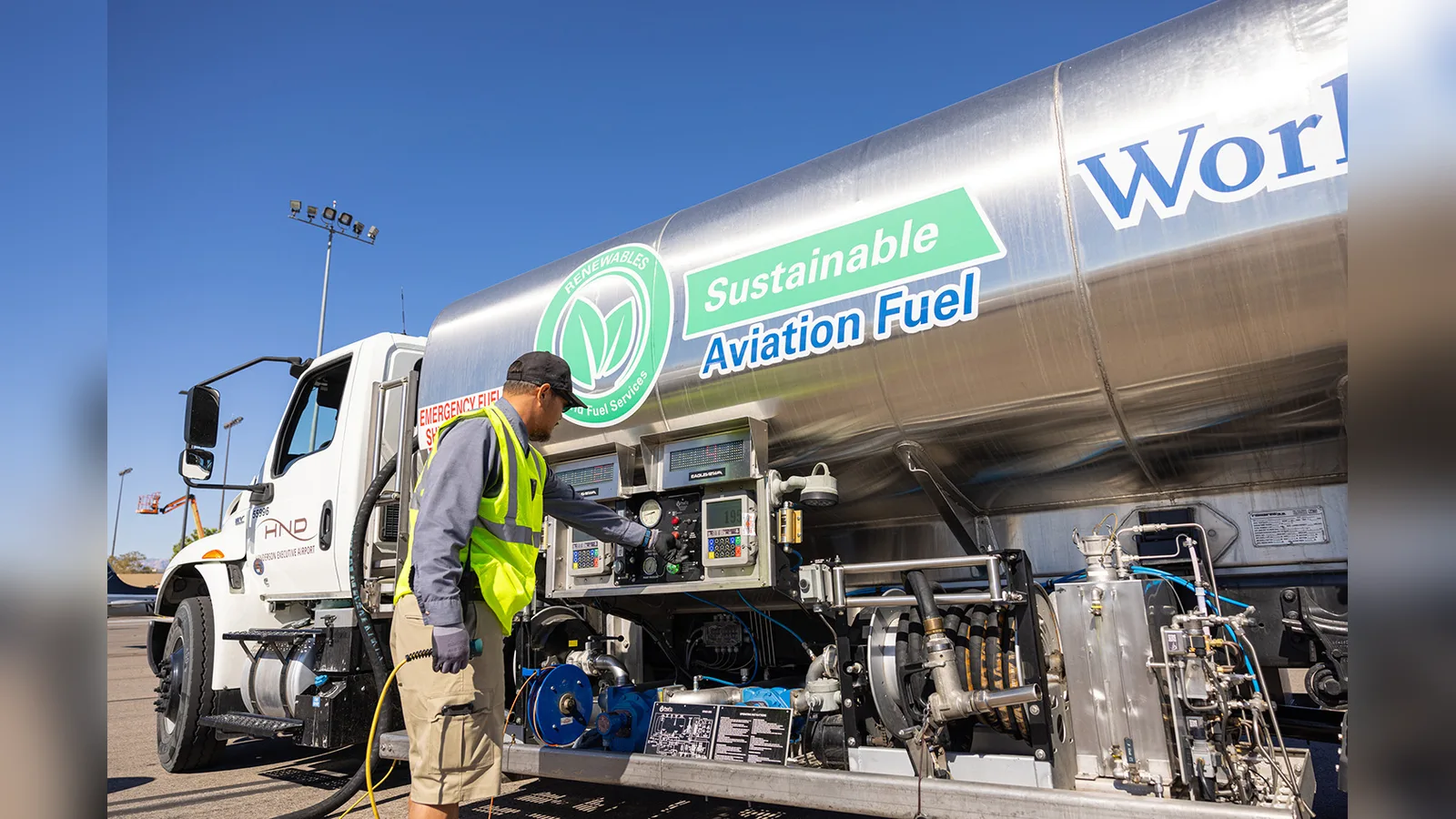
More FBOs now list sustainable aviation fuel on the menu, and more flight departments are being asked by owners and passengers whether the airplane can take it. For the crew standing next to the fuel truck, the good news is that SAF is designed to be boring. Here is what it is, how it gets into the tank, and what actually changes for pilots and flight attendants.
What SAF is
The National Business Aviation Association describes sustainable aviation fuel as "a low-carbon synthetic jet fuel that can be used safely in any turbine-powered aircraft." It is made from non-petroleum feedstocks such as waste fats, oils and greases, agricultural and forest waste, municipal solid waste, waste gases from steel mills and even captured carbon dioxide, according to NBAA and the U.S. Department of Energy's Alternative Fuels Data Center.
The climate case rests on lifecycle emissions, not on what comes out of the tailpipe. NBAA says SAF can potentially cut lifecycle greenhouse gas emissions by up to 80% compared with conventional jet fuel, depending on how and from what it is made.
How it is blended and certified
SAF does not go into an airplane neat. It is blended with conventional Jet A, and the blend limits come from ASTM International standards.
According to the Department of Energy, ASTM D7566, the specification for aviation turbine fuel containing synthesized hydrocarbons, sets the quality standards for SAF and lists the approved production pathways. Each pathway carries its own blending cap of between 10% and 50%. The most common pathway today, hydroprocessed esters and fatty acids (HEFA), which turns fats, oils and greases into jet fuel, is approved at up to 50%. Fischer-Tropsch fuels made from gasified biomass are also capped at 50%, while fuel made from fermented sugars is capped at 10%.
A separate route is co-processing: the standard jet fuel specification, ASTM D1655, allows a refinery to process biomass feedstocks alongside petroleum in blends of up to 5%, the DOE says.
Once blended to specification, the product is treated as jet fuel. That is the "drop-in" idea: the DOE notes that SAF blended with conventional Jet A can be used in existing aircraft and existing fueling infrastructure.
What changes for the crew
In practice, very little. Because a certified blend meets jet fuel specifications, there is no separate fuel type to select, no new procedures in the flight deck and no new handling for the line service technician. Engines, fuel systems and storage tanks designed for Jet A handle it the same way.
Crews should still do what they always do: confirm the fuel grade on the truck and the ticket, watch the fueling when practical, take a sample if the operator's procedures call for it, and keep the fuel receipt. If an owner or charter customer is paying a premium for SAF, the paperwork matters more than usual, because the documentation from the FBO is how the purchase is recorded for the operator's sustainability reporting.
When passengers ask, a simple, accurate answer works best: the airplane is burning a certified blend of conventional jet fuel and fuel made from lower-carbon sources, and nothing about the flight changes.
Availability is the real limit
The bottleneck is supply, not airplanes. NBAA says SAF availability at FBOs around the country continues to grow, but that more supply at a competitive price is needed. The industry and federal goal, set under the government's SAF Grand Challenge, is 3 billion gallons of annual U.S. production by 2030 and 35 billion gallons by 2050, according to the DOE.
Production is still small next to that target. The DOE cites Environmental Protection Agency data showing about 5 million gallons of SAF consumed in the U.S. in 2021, 15.84 million gallons in 2022 and 24.5 million gallons in 2023. The DOE also notes that many airlines have signed agreements for the output of existing and future plants, which means business aviation competes for the same limited supply.
Price and tax policy are part of that picture. NBAA has backed bipartisan legislation, the Securing America's Fuels Act, that would restore the 45Z clean fuel production tax credit for SAF to $1.75 per gallon and extend it through 2033. NBAA has also pointed to state action, such as Wisconsin's April 2026 law to encourage SAF production, and has arranged SAF supply at Las Vegas-area airports during its annual NBAA-BACE convention.
The bottom line
SAF is a fuel-supply and policy story far more than a cockpit story. The airplane does not know the difference, the procedures stay the same, and the limits that matter are how much fuel exists, where it is sold and what it costs.